Category Archives: Type 8

Type 8: We Get the Job Done Right

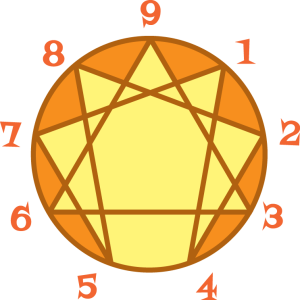
Sunburst_8Here’s the video clip on Type 8 from understandingpersonality.com. After watching this a couple of times, I still had trouble relating to several of these people and their descriptions of their personal experiences. I thought that might be because I have such a strong 7 wing. But I’ve watched 8s on other videos with whom I’ve identified quite closely. Then I noticed that someone else commented that he or she thought only one of the people in this video is actually an 8. I don’t know whether that person was another 8.

I call a spade a spade, and I use it.

Ha! That was my favorite comment. It made me laugh out loud. But what I related to most were the two comments about dealing with “fools.” My partner used to threaten to get me a T-shirt (one in a series) that said “Does Not Suffer Fools Gladly.”

Look, a Bird!

Procrastination

Everyone procrastinates at one time or another, but not everyone is a habitual procrastinator. Procrastination is a characteristic often associated with 6s. It is also quite often linked with perfectionism, as if perfectionism is a direct and quantifiable cause of procrastination. This is one of those things I’ve always wondered about because 6s have never seemed like perfectionists to me.

6s can be full of anxiety, however; so maybe anxiety leads to procrastination. But according to the research, the anxiety people feel when a deadline is staring them in the face and they aren’t sure they can meet it is the result of having procrastinated.

According to analysis of about a hundred studies involving tens of thousands of participants, anxiety produces a negligible amount of procrastination at best—and even that tiny amount disappears completely after you take into account other personality characteristics, especially impulsiveness.
–Piers Steel, Ph.D., author of The Procrastination Equation

Impulsive?

It turns out that perfectionists actually tend to procrastinate less than other people do, which makes sense when you think about it. According to Piers Steel, it’s impulsiveness that is “the nickel-iron core” of procrastination:

[I]mpulsiveness creates procrastination because it makes small but immediate temptations, like playing Minesweeper or updating your social network status, especially attractive. The reward might be small but the delay is virtually nonexistent. On the flip side, large but distant rewards, like graduating or saving for retirement, aren’t valued much at all. Despite their importance, these long-term goals don’t motivate us until the march of time itself eventually transforms them into short-term consequences. Only in those final hours do we frantically try to catch up on what we really should have addressed long before. The more impulsive you are, the closer to deadlines you need to be before you’ll feel fully motivated.

Or Distractible?

That makes sense, but I wonder if distractibility—which means to turn away from the original focus of attention or interest—might not be a more apt term for this than impulsiveness—which means to act suddenly on impulse without reflection.

Just as everyone procrastinates from time to time, anyone can become distracted. But maybe some Enneagram types are naturally easier to distract than others.

1s, 2s, and 6s, the Compliant types, are prone to getting caught up in, and distracted by, whatever is going on in the immediate moment, at which point they lose sight of the bigger picture. It seems like they have a more difficult time keeping focused.

9s are notorious for their low distractibility threshold. One 9 in an Enneagram video confessed that even if she had to be somewhere at a particular time and was already late, she might still find herself at home picking dead leaves off of her plants. Random elements in the environment reach out and grab 9s’ attention. “Look, a bird!”

4s and 5s are not naturally focused on or attuned to the demands of the external world. When they put things off, is it because they are procrastinating or because they simply don’t care? Maybe it’s the same thing. Steel says:

Two big contributing factors to procrastination are straightforward: low self-confidence and the aversiveness of tasks. If we doubt our ability to complete a chore and find it as exciting as watching concrete set, we are more likely to put it off. It is no wonder that taxes, which are both difficult and boring, are famous for making procrastinators out of almost all of us.

So 4s might be inclined to procrastinate about boring tasks and 5s about tasks they feel less confident about doing successfully.

7s are sometimes described as impulsive and other times as distracted, as if the terms mean the same thing, which they don’t. I think impulsive better defines them than distracted, but they are likely to procrastinate when it comes to doing things they see as painful or unpleasant.

8s are usually very focused and don’t appear to be procrastinators, but they are no strangers to it. For one thing, they tend to avoid doing things that aren’t a part of their current agenda. For another, they don’t see a problem in putting things off till the last minute, or not doing them at all, figuring they can deal with the consequences.

3s may be the least likely of all the types to procrastinate. Their drive to succeed means they need to do whatever they attempt well. Procrastinating would be too dangerous a game to play.

Go ahead, procrastinate

How much do you procrastinate? Here’s a link to a procrastination survey you can complete. It might be an interesting distraction.

Mindful Movement

Nobel Peace Prize Nominee Thich Nhat Hanh

Thich Nhat Hanh (Photo credit: Geoff Livingston)

As a Doing type, I would rather have several challenging or difficult things to accomplish than attempt to try to do nothing–and by doing nothing, I mean meditating. I have meditated off and on over the decades, but it’s always an uphill battle.

I wrote about different meditation practices for the Doing, Thinking, and Feeling center types a while back. I’ve since come across Thich Nhat Hanh‘s 10 Mindful Movements exercises, and they have been very effective for me. It’s so much easier for me to be mindful when I’m performing these slow movements than when I’m trying to sit still.

For one thing, the movements give me something to focus my attention on. For another, when I’m moving–even this slowly–I don’t get as squirmy as I do when I’m sitting. The movements are very relaxing and refreshing, so they’re also good stress-relievers. You can do all of them, just a few, or even one to calm down or switch gears in the middle of the day.

This video goes through the entire sequence of 10 movements. It’s excerpted from a longer video available from Sounds True. There’s also a book, for those who like hard copy.

In the Shadow of Type 8: Weakness

Crying..

Crying.. (Photo credit: Anders Ljungberg)

People often look to 8s to take the lead because 8s are perceived of as self-confident, decisive, strong, powerful, direct, courageous, resourceful, just, and of course take-charge. They talk the talk and walk the walk. Since taking charge comes naturally to them, others pick up on it and often fall in line behind them. Hopefully the 8 taking the lead is heading somewhere everyone else wants to go and not for the nearest cliff. That’s a danger since 8s can be very convincing. This is often because they don’t rely on outside authorities but prefer to figure things out for themselves, so they are quite firm in their resulting convictions. That makes them appear extremely confident, which is something we value in leaders.

I think whether you’re having setbacks or not, the role of a leader is to always display a winning attitude.
–Colin Powell

Right. No one wants a weak, wishy-washy, fearful, timid, muddled leader. And no 8 wants to be seen as such. So while 8s really do possess many of those admirable qualities, they also know those are the qualities others want them to project, especially when they are in leadership roles. However, it’s hard for 8s to take off the leader hat when they go home at the end of the day, hard to let down their guard in one setting and keep it up in another.

About that River in Egypt

Jerome Wagner, in The Enneagram Spectrum of Personality Styles, says the defense mechanism of 8s is denial.

To prevent weakness from showing up in your awareness or persona, you deny any presence of it. “I don’t hurt, I’m not nice, I’m not sentimental, I don’t need you,” etc.

Each 8 probably defines weakness in his or her own way, but however 8s define it, it is definitely anathema to them. They don’t want to experience it, and they certainly don’t want others to see any sign of weakness in them. So they power through situations that might leave others gasping at the side of the road. There’s a time and place for that, but not every time and every place.

I Am Woman, Hear Me Roar

There is a sacredness in tears. They are not the mark of weakness, but of power. They speak more eloquently than ten thousand tongues. They are the messengers of overwhelming grief, of deep contrition, and of unspeakable love.
–Washington Irving

8s are good at denying, stuffing, covering up, or ignoring what they perceive as weakness. Pretending it’s not there doesn’t make it go away, though, so the better 8s get at denial, the more pressure builds below the surface. Some days you can look at an 8 the wrong way and receive The Wrath of Khan in return. You don’t know what just hit you, and the 8 is as surprised as you are.

Take a Hike!

In The Wisdom of the Enneagram, Don Riso and Russ Hudson have a number of suggestions for 8s that center on getting in touch with their feelings (which they admit is a cliché) and aren’t very specific. I don’t think telling 8s to get in touch with their feelings is particularly helpful, since not all 8s are out of touch with their feelings, or at least not all the time. They just don’t consider them a high priority. The following suggestion seems much more practical and therefore likely to appeal to 8s:

Take some quiet time to restore your soul. This doesn’t mean watching television, eating, or drinking—really take time to be with yourself and enjoy simple things. Take a tip from your next-door neighbors, the Nines, and let your senses be revitalized by nature. Although your type would not be among the first in line for a class in meditation, quiet, centering practices are tremendously helpful to reduce your stress levels.

8s are Doing types, so going for a walk or hike or just getting out in nature on a regular basis can be a non-threatening way for them to center themselves, if they do it alone, or to connect with other people. Physical activity is also an excellent way to de-stress. And the 8s also get to feel that they’ve accomplished something at the same time!

New Year’s Counter-Resolutions

Illustration Friday - Resolution

Resolution (Photo credit: The hills are alive)

Sometimes it’s best to be LESS than we can be, especially when it comes to the all-too-entrenched compulsions of our personality.

So here are some resolutions for the new year that run counter to our natural inclinations. If your past resolutions have worked as well as mine, you might be up for giving one or two of these a try.

Type 1:

  • Create a schedule for goofing off.
  • Make at least one mistake per day.
  • Let sleeping dogs lie.

Type 2:

  • Pamper myself, whether I feel like it or not.
  • Let them figure it out by themselves once in a while.
  • Start an argument just for the heck of it.

Type 3:

  • Make an anonymous charitable donation (and don’t tell anyone about it).
  • Leave the house without combing my hair.
  • Start having goal-less Wednesdays.

Type 4:

  • Lighten up!
  • Try doing one thing a week the way everyone else does it.
  • Take something at face value instead of searching for its deeper meaning.

Type 5:

  • Set up a meet and greet with the neighbors.
  • Next time, don’t read the instructions first.
  • At least once a month, throw something out.

Type 6:

  • Do whatever they least expect me to do.
  • Take a day off in the middle of the week for no reason.
  • Lower shields.

Type 7:

  • Just say “no.”
  • Finish one thing before starting something else.
  • Spend some quiet time alone without distractions.

Type 8:

  • Leave the office at quitting time—or before.
  • Find lower gear and occasionally shift into it.
  • Let the right one in.

Type 9:

  • Do whatever I feel like doing no matter how much chaos ensues as a result.
  • Give up being passive-aggressive for being outright aggressive.
  • Create a longer to-do list.

Happy New Year!

~ ~ ~

NOTE: As of January 2013, new Nine Paths posts will be published every Monday and Friday instead of every Monday, Wednesday, and Friday.

Make It So!

A derivative collage from two other files - ca...

Captain Jean Luc Picard on board the Enterprise (Photo credit: Wikipedia)

Jean Luc Picard was the captain of the Enterprise. So his directive to “make it so” was aimed at the people under his command in order to further some aspect of the starship’s current mission.

Each of us is on a mission, too, though probably not an interstellar one. And we give ourselves directives to keep focused on our particular mission.

Self Directives by Type

Type 1: Watch Yourself!

Type 2: Ignore Yourself!

Type 3: Distinguish Yourself!

Type 4: Be Yourself!

Type 5: Prepare Yourself!

Type 6: Brace Yourself!

Type 7: Enjoy Yourself!

Type 8: Push Yourself!

Type 9: Hide Yourself!

The Type 3 Culture of est? (Part 3)

In which I finally (sort of) get to the point—or at least a point.
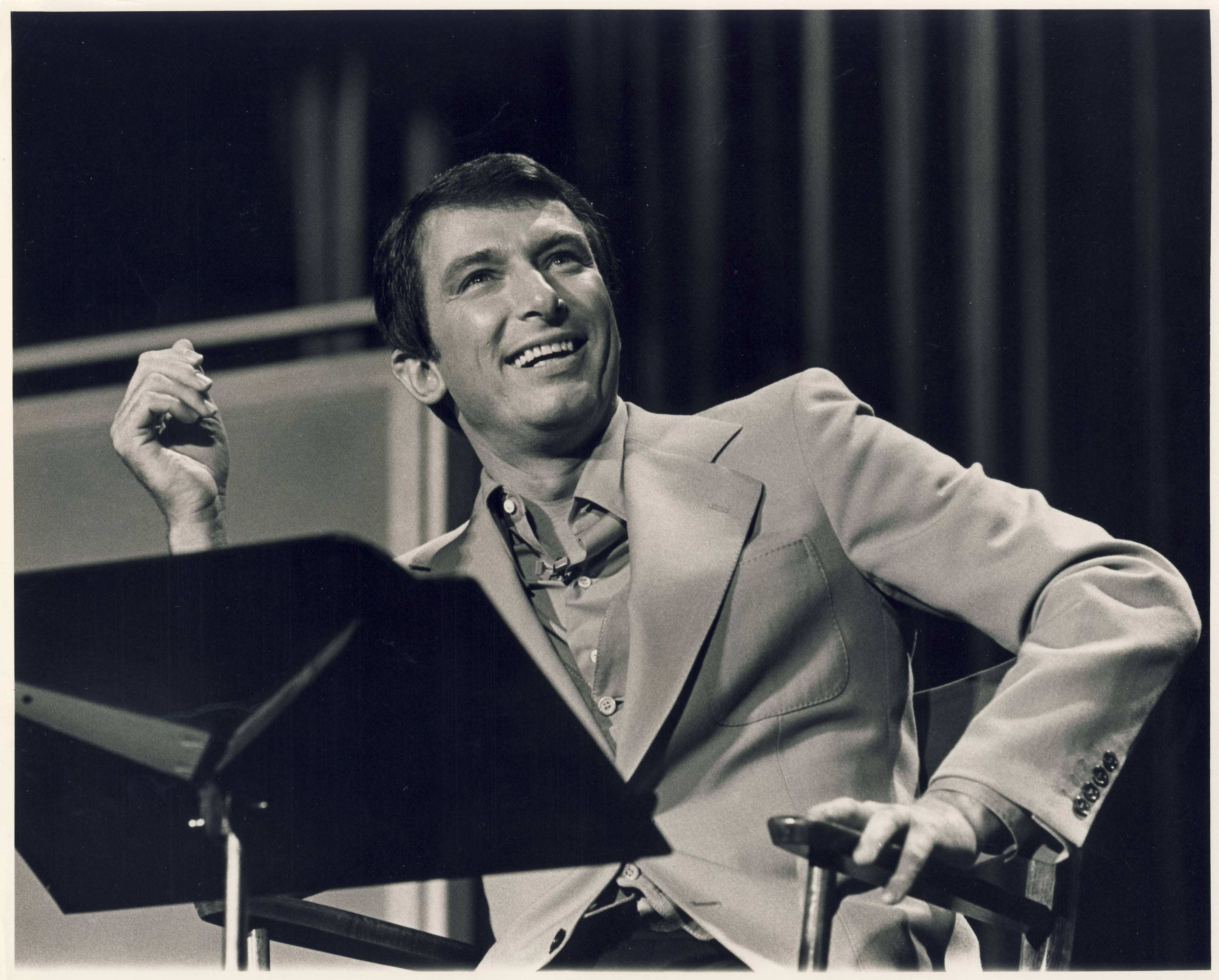
Werner Erhard

Werner Erhard

During my two years of participation in est, I took all of the seminars, some more than once, and many workshops. I also took the later incarnation of the training called the Forum. For 12 months, I was team leader of trainer support for the Berkeley/Oakland Area Center, which meant I enrolled trainer support supervisors for all trainings and workshops and made sure they enrolled teams. Sometimes I ran trainer support for a training or workshop myself.  For six months, I was team leader for seminar logistics (although I had never assisted on a logistics team). As team leader, I enrolled logistics supervisors for all the 10-week seminars, made sure they enrolled teams, and visited each seminar at least once to make sure everything was running smoothly. I also assisted for several months in the office of the San Francisco Area Center.

I thought about going through the guest seminar leader program, but decided against it. While I was still considering it, I was encouraged to spiff up my presentation. Although I had plenty of nicely tailored business suits, I didn’t have a particular style. As an 8, I’ve always been more interested comfort than style. But I was willing to look into it—and it was the 80s—so I followed the suggestion of a couple of my peers and hired a wardrobe consultant. Her name was Rivka, and she wanted me to get my colors done. [There was a book called Color Me Beautiful that was popular at the time. It helped you decide whether you were a spring, summer, winter, or autumn and then gave you a suitable palette of colors for your wardrobe.] I refused to do that, though, which disappointed Rivka. But she said she thought I was an “autumn,” and we went shopping from there: new make-up; new shoes; new clothes—all in colors I would never have thought of for myself. Turned out I am an autumn. In terms of physical presentation, I was transformed.

The Motivator?

It’s hard to escape making a connection between the 3’s preoccupation with having a successful image and the est preoccupation with personal presentation. In Personality Types, Riso and Hudson say:

The United States is fast becoming a dysfunctional “Three” culture: driven, narcissistic, image-oriented, emphasizing style over substance, symbols over reality.

I never felt that est emphasized style over substance or symbols over reality, though. As far as being driven, Werner said:

Your power is a function of velocity, that is to say, your power is a function of the rate at which you translate intention into reality. Most of us disempower ourselves by finding a way to slow, impede, or make more complex than necessary the process of translating intention into reality.

It’s part of my nature as an 8 to be driven, so those words were fuel for me. That’s one of the few quotes I typed up (pre-personal computer) and still have.

3s are called the Motivator, the Achiever, the Succeeder, the Performer, and the Status-Seeker. I could see applying all those names to Werner. He is a very persuasive guy, and many aspects of type 3 fit him. But having said all that, I’m not fully convinced he is a 3.

Or the Maverick?

Here’s how Riso and Hudson describe the healthy version of the 8w7 subtype in The Wisdom of the Enneagram:

Having a quick mind combined with a vision for practical possibilities, people of this subtype are often charismatic and able to attract the support of others to join them in their vision. They are action-oriented, and want to have an impact on their world. They are also good at challenging others to stretch their abilities and to surpass their own expectations so that their lives can be better in some practical way. This is the most independent subtype, often entrepreneurial and interested in creating projects that will ensure their independence.

Based on my experience of him, that description fits Werner perfectly.

Parting Ways

I stopped participating in est after two years because I realized that it was too easy for me. The assisting program, especially, was the perfect place for me to excel at what I was already good at doing. I didn’t have to stretch myself at all. My partner, on the other hand, had a much harder time with assisting, but he ultimately got more out of it than I did. After learning about the Enneagram, I understood that est was Doing-oriented, just like I am, with an emphasis on getting the job done, whatever the job was.

In life you wind up with one of two things – the results or the reason why you don’t have the results. Results don’t have to be explained. They just are.

When we were assisting, we put our personal feelings on the back burner. Feelings were allowed and dealt with in the training, of course, which was a very emotional experience for some people. But although I recall very little specific detail from my own training, I do remember Werner standing on the stage with a box of tissue, pulling them out one-by-one, waving them to the side, and then letting each one flutter to the floor. “Here’s a feeling. Here’s a feeling. Here’s another feeling.” The point was that feelings are fleeting. They come; they go. Don’t get attached to them. I may have interpreted that to mean they could be easily dismissed.

When I decided to get certified as an Enneagram instructor, I chose the training offered by Kathy Hurley and Ted Donson because they seemed to include more of the Feeling Center in their work. That’s the Center I access least effectively, and I realized I needed to stretch myself.

Of course, I went through—and saw—the est training through my own particular filter. The process of the training was not a pleasant experience for me. But the doing involved in assisting was my metier. When I decided to stop participating, my point of view of est—and of assisting—was still colored by the filter through which I viewed the world. I wonder what my experience would have been if I’d been aware of the Enneagram while I was actively involved in est. I’m pretty sure there was a lot more I could have gotten out of it if I hadn’t been so darned good at that particular piece of it.

est and the Enneagram

There are a lot of similarities between est and the Enneagram. Werner talked about the filters through which we look at the world and which distort reality. The Enneagram describes the particularities of those filters. Werner was all about authenticity and authentic self-expression. The Enneagram is a tool to help us move beyond the compulsion of type to experience our true nature, or essence. In the training you get, beyond any doubt, that you are a machine. With the Enneagram you get that you function on autopilot almost 100% of the time.

Making a Difference

These concepts are not unique to either est or the Enneagram, of course. They’re just different approaches to what seem to be universal truths. est focused on making commitments, showing up, and producing a result (doing). The Enneagram is a more intellectual, systematized approach.

What I’m left with from est—what has stayed with me all this time—is this:

You and I want our lives to matter. We want our lives to make a real difference—to be of genuine consequence in the world. We know that there is no satisfaction in merely going through the motions, even if those motions make us successful or even if we have arranged to make those motions pleasant. We want to know we have had some impact on the world. In fact, you and I want to contribute to the quality of life. We want to make the world work.

The Type 3 Culture of est (Part 1)

In which the universe hoodwinks me into being trained by Werner Erhard himself.

English: Face portion of a casual photo at a m...

Werner Erhard. (Photo credit: Wikipedia)

I took est (officially Erhard Seminars Training, but known to us graduates simply as “the training”) in the early 80s. I’m surprised I didn’t encounter it much earlier, since I moved to San Francisco in 1974 in an experimental frame of mind and San Francisco was home base for est. I bumped into the Scientology crew downtown one night and signed up for their beginners’ class just to find out what it was all about. I enjoyed the class, but that organization had so many layers of bureaucracy, it made the IRS look streamlined. I also spent some time at one of the Synanon enclaves in the East Bay, since the first friend I made in the City was an ex-junkie. (Synanon was an alternative drug rehab community founded by Chuck Dederich, a former alcoholic.) But I don’t recall ever running into anyone around that time who was involved in est.

A friend in Michigan had taken the training, however, and would not shut up about how amazing it was and how I should take it, too. I was tired of hearing about it, so on one of my visits, I agreed to go with him to a guest seminar if he agreed that regardless of whether I decided to take the training or not he would stop talking to me about it. We had a two-hour drive to Detroit where the seminar was being held. On the way, I had to listen to a series of cassette tapes of talks given by Werner Erhard. I hated the sound of Werner’s voice so much that my mind was made up: there was no way I was going to take the training.

As it turned out, the man who led the guest seminar (Les?) had a very low key and matter-of-fact demeanor. He was the anti-Werner Erhard, if you will. What he said made sense and sounded like something I could benefit from. Est was supposed to “transform one’s ability to experience living so that the situations one had been trying to change or had been putting up with clear up just in the process of life itself.” Sign me up. But wait a sec. It turned out that although Werner had not been involved in leading trainings for a while, rumor had it he was going to lead the next scheduled training in San Francisco. So no, do not sign me up for that one. What else do you have? The next available training in my neck of the woods was in the East Bay.

WHAT WAS I THINKING?

So, yes, I enrolled in a training in Berkeley, which involved a considerably longer commute, just so I could avoid Werner Erhard—the founder of the training I was enrolling in. Absurd as they were, my efforts turned out to be for naught.

The est training consisted of two weekends (all day Saturday and all day Sunday) and three Wednesday evening sessions in between the two weekends. The Wednesday evening before the first training weekend, my partner and I, along with a couple hundred other trainees, trooped into the ballroom where the training would be held. I glanced at the staff in the back of the room, and although I had never seen a picture of the man, I said to my partner—and these were my exact words— “Fuck. That’s Werner.” Which it was.

I got over my resistance to Werner. The man is very charming and disarming, as well as relentless. He’s generally typed as a 3, which seems right on. Although I hated the training itself, that didn’t have anything to do with Werner (other than the fact that he created it). What I didn’t like was having to sit in a chair hour after hour listening to other people talk. You could say I resisted that. And I resisted being confronted with my own stuff, which you’re pretty much forced to confront while you’re sitting in a chair hour after hour unable to escape or even converse with the person seated next to you.

It’s true that you were not allowed to go to the restroom except during the very infrequent official breaks. On the first day of the training, I got into a conversation with someone during the first break and failed to make use of the restroom before we were ushered back into the training room. Five hours till the next opportunity. Herb Caen, who was a long-time columnist for the San Francisco Chronicle, once included an anecdote about a woman who asked a clerk in a downtown San Francisco department store to direct her to the ladies room. The clerk said there were no restrooms on the premises. The customer asked what the clerk did when she needed to use the restroom. The clerk said, “I took est. I don’t have to use the restroom.” My friends today will tell you that I can go longer than anyone else they know without needing to stop for a bathroom break. That has been so valuable I think it was worth the price of the training.

But that’s not all I got.

Next time: Part 2, in which I am apparently recognized as an 8, even though none of us has heard of the Enneagram yet.

Typing Abraham Lincoln

English: Abraham Lincoln, the sixteenth Presid...

Abraham Lincoln, the sixteenth President of the United States. (Photo credit: Wikipedia)

Abe Lincoln is all the rage these days, and I’ve been going with the flow. I recently finished reading Rise to Greatness: Abraham Lincoln and America’s Most Perilous Year. This extremely well-researched and well-written book by David Von Drehle covers the year 1862, Lincoln’s first full year in the office of President. On the first day of 1863, he signed the Emancipation Proclamation.

Shortly after finishing the book, I saw the movie, Lincoln, which takes place in 1865, the year the 13th Amendment was passed by the House of Representatives.

Just about everyone in the Enneagram world seems convinced that Abraham Lincoln was a 9w1. Typing famous people, dead or alive, is common among Enneagram experts and amateurs alike. It serves a purpose in offering examples of types. But it runs counter to most teachers’ recommendations that people come to their own conclusion about which type they are. Many of the people who are held up as examples of type never heard of the Enneagram, let alone filled out a questionnaire or tried to identify themselves. And we can’t get inside their heads to understand where they were coming from or what motivated them. In a lot of cases, all we see is what’s on the outside. So we should take all of this typing of dead people with a grain of salt—or at least a caveat or two.

As far as Abe Lincoln goes, I will agree from what I’ve read that he was most likely a 9. Had he not had such a grasp of the big picture—keeping the Union together—our world would be inconceivably different today. But I’m not sure why everyone believes he had a 1 wing. Is it because of his nickname, “Honest Abe”? Or is it because only someone with a 1 wing (an Idealist) could possibly have been responsible for the Emancipation Proclamation and for bringing an end to slavery? If so, that’s the kind of stereotyping that should make us Enneagram experts squirm.

More 8 than 1

Lincoln was an ambitious man who wanted to make his mark, to have an impact on his world, to be remembered. He was also notoriously thick-skinned. Those are not signs of either 9s or 1s. Those are characteristics of 8s. 8s, too, are greatly concerned with justice, fairness, and equality and with defending and protecting the underdog, whoever they perceive the underdog to be. When 8s take up causes they will do whatever they feel is necessary to achieve their goals. If that includes making under-the-table deals with the “enemy”—as Lincoln did in order to get the votes he needed for the 13th Amendment—so be it. If that includes shading the truth—as he did about the existence of peace talks with the Confederacy in order to assure the House vote took place before the war ended—so be it. The ends very often justify the means for 8s.

As I was reading Von Drehle’s book, I came across many descriptions of Lincoln’s behavior, attitudes, and personal characteristics like these:

  • He had always been proud of his physique, and enjoyed challenging other men to contests of strength, which he inevitably won. He used his size subtly to intimidate, even as he used his humor to put people off guard.
  • …[F]or now Lincoln was still the virile figure of his campaign propaganda, the rail-splitter whose blend of brains and brawn reflected America’s favored image of itself: strong, bright, and independent.
  • Lincoln had a shambling animal force about him, which some found appealing and others found unsettling.

Which type does that remind you of?

When I brought up this typing issue with a friend who is a 1w9—and a history buff—he said he had never thought of Lincoln as an idealist. After seeing Lincoln, I suggested to him that Thaddeus Stevens might have been a 1. At least as portrayed in the movie, he was greatly pained when he reluctantly agreed to deny what he believed to be moral and true in order to achieve the short-term gain of passage of the 13th Amendment. Lincoln, on the other hand, did not seem to have those sorts of compunctions about the wheeling and dealing he undertook for what he saw as the greater good.

Lincoln was a politician. He never denied that. I think being a 9w8 made it possible for him to see what needed to be done in the broadest of terms and then to be able to do it, no matter how he had to bend either rules or people.

From time to time, even “Honest Abe” himself exaggerated or dissembled in pursuit of a great cause.

— Lincoln scholar Harold Holzer

I highly recommend both the book and the movie and plan to write about General George McClellan, who fairly jumps from the pages of Von Drehle’s book as a perfect example of a 5. Of course, McClellan is dead and I never met the man, but strictly as portrayed in Von Drehle’s book–my caveat–he’s a classic type 5.

Curiouser and Curiouser

Naima, the Curious Cat

Naima, the Curious Cat

In his book, Waking Up, Charles Tart points out that most people, especially in the West, aren’t taught self-observation skills at an early age. What if we had spent as much time learning how to observe ourselves as we spent learning how to read?

I’m a fanatical reader, so I don’t say this lightly, but maybe self-observation skills are even more valuable than reading skills. In many ways, reading helps open up the outer world to us, but self-observation opens up our own inner world—which is no less vast, really.

These are a few things Tart has to say about self-observation.

It’s all grist for the mill

In its most general form, the practice of self-observation is simply a matter of paying attention to everything, noticing whatever happens, being open-mindedly curious about all that is going on. This everything will almost always be a mixture of perceptions of external events and your internal reactions to them. You should drop all a priori beliefs about what you should be interested in, what is important and not important. Whatever is is an appropriate focus for observation.

THREE WAYS TO PAY ATTENTION

This open-minded attention must be more than just intellectual attention. Remember that we are three-brained beings. Thus the attention we should strive to pay to our world and our selves is an emotional attention and a body attention as well as an intellectual attention.

Above all, be curious

The practice of self-observation…is the practice of being curious, along with a commitment to do your best to observe and learn whatever is there, regardless of your preferences or fears.

I have to keep reminding myself to stay curious about what is going on around me and within me. And also to stay curious about my own actions and reactions. It’s so much harder for me to get sucked into the drama, the compulsions, and the autopilot behavior when I’m able to maintain an attitude of curiosity about everything that’s happening.

My usual modus operandi is probably the same as everyone else’s. I operate on the assumption that there’s a way things should be and when things are going the way they should be going, all’s well. But more often than not, things do not go the way I think they should. And people do not behave the way I think they should. Even I don’t behave the way I think I should. And don’t get me started on the weather!

As an 8, when things are not going as I expect them to go, my resistance kicks in. That’s a perfect opportunity to wake up and pay attention. When I’m able to do that, I feel much lighter and more expansive. When I don’t or can’t do it, I dig myself deeper into my resistance. No good ever comes of that.

What kicks in for you when things aren’t going your way?

If I want to use the moments when my expectations rub up against the edge of reality to wake up, I have to have the intention to do so.

The practice of self-observation begins with a desire and resolution on your part: “I want to know what really is, regardless of how I prefer things to be.”

As I’ve remarked elsewhere, self-observation is not for wimps. It isn’t easy to let go of our preconceived ideas about how the world should work. It’s hard to give up having a temper tantrum when we don’t get our way. Growing up can be painful at times.

If you diligently practice self-observation, you will see much that his painful and much that is joyful, but seeing more of reality will turn out to be highly preferable to living in fantasy. You will begin creating “something” in yourself, a quality, a function, a skill, akin to learning how the controls of your automated airliner work. And you will be pleasantly surprised at how much more there is to life.