Tag Archives: Enneagram

Online Enneagram Tests

personality

personality (Photo credit: hang_in_there)

There are quite a few websites that allow you to take personality typing tests online to help you discover your Enneagram type. I say “help you” because getting your type right may not be that easy or straightforward. But at least taking one or more tests can get you in the ballpark. You should be able to rule out several types even if you’re still unsure which one you are. Then you can do some further exploration by reading about and looking at the differences between the types you’re still considering. Focus on motivation instead of behaviors. Motivation is key.

Here are five sites to check out. Most have free tests, but a couple of them cost $10.00 to take.

ECLECTIC ENERGIES (www.eclecticenergies.com)

This site gives you two options, a “Classical enneagram test” and an “Enneagram test with instinctual variant.” I took the Classical test and the results were accurate.

ENNEAGRAM INSTITUTE (www.enneagraminstitute.com)

There are three test options here, two free and one for $10.00:

The free RHETI Sampler consists of 36 forced-choice statements and is estimated to take 10 minutes to complete.

The free Brief QUEST is estimated to take 5 minutes to complete.

For $10.00, you can take the full RHETI, which consists of 144 forced-choice statements and is estimated to take 40 minutes to complete.

I took version 2.0 of the RHETI years ago and the results were accurate for my type and wing. There is now a version 2.5 of the test, which I don’t have any experience with. Overall, I think this is the best Enneagram test out there. But, as with all the tests, the results aren’t always as clear-cut.

ENNEAGRAM CENTRAL (enneagramcentral.com)

This test first accurately pegged me as an Aggressive type, but then mistyped me as a 3. (3 was my third-highest score in the RHETI, but it wasn’t close to 8 or 7 in that test.)

THE ENNEAGRAM SPECTRUM OF PERSONALITY STYLES (enneagramspectrum.com)

You can take the WEPSS (Wagner Enneagram Personality Style Scales) online for $10.00. I took this test many years ago, but I don’t recall the results.

ENNEAGRAM WORLDWIDE (enneagramworldwide.com)

As long as you register, you can take the The Essential Enneagram Test online. This consists of paragraph descriptions of the 9 types. You select the three that are most like you. This one was easy for me, and I think the descriptions are good.

Related articles

In the Shadow of Type 2: Neediness

We Need Help

We Need Help (Photo credit: Alain-Christian)

2s see themselves as caring, sympathetic, kind, nurturing, friendly, giving, compassionate, warm-hearted, and above all, helpful.

2s make good friends. Having a 2 in your corner can be very reassuring. They will readily offer their assistance—sometimes even before the other person is aware he or she needs it. 2s’ sense of self-worth depends upon how valuable they are to others, or how valuable they perceive themselves to be.

Everyone needs a helping hand from time to time, and we can probably agree that there isn’t enough genuine altruism in the world. So it’s easy to applaud the selfless behavior of 2s. It’s also sometimes easy to take advantage of it since 2s really, really want others to like them.

The Flip Side

Of course, as with all the types, there’s a catch. If 2s aren’t acknowledged for all they do and recognized for the important role they play, they may either turn into martyrs or lash out at the very people they had previously lavished their love and attention on.

In The Enneagram Spectrum of Personality Styles, Jerome Wagner lists repression as the primary defense mechanism of 2s:

Because your own needs make you anxious, you keep them out of your awareness by repressing them. You project your needs onto others (so other people are needy, but you aren’t).

Needy is kind of a loaded term. There are people all over the world in need of the most basic elements of survival: food, water, shelter, clothing, and personal safety. They are undeniably needy, or at least in need. Then there are those of us who haven’t experienced those kinds of needs and aren’t likely to.

But emotional needs are important, too. The mental health profession makes an interesting distinction between needs and neediness. Becoming aware of and expressing one’s needs is a positive thing. Being a needy person, however, is generally viewed negatively. On top of that, we have the cultural dissonance (somewhat reflected in the divisiveness of U.S. politics) that applauds both self-reliance and toughing it out, on the one hand, and concern for the less-fortunate, on the other.

Everyone of us needs to show how much we care for each other and, in the process, care for ourselves.

–Princess Diana

In a way, 2s reflect our society’s discomfort and ambivalence about needs, neediness, and needy people. Although quick to identify, sympathize with, and respond to others’ needs, they relegate their own needs to the shadowland. In a way, they tend to themselves by tending to others. But, of course, that indirect route isn’t really very satisfying for either party.

Don Riso and Russ Hudson (The Wisdom of the Enneagram) suggest 2s examine their motives:

Twos tend to give too much and then regret it. Be brutally honest with yourself about your motives when you do anything for anyone. Learn to doubt your own rationales. Learn to listen to your body and your heart: when both ache, you know that you are hurting, and giving more to others so that they will appreciate you will not ultimately heal that hurt. On the other hand, closing down and cutting off ties with others will not solve the problem, either. Only brutal honesty about your intentions and your needs will do.

I’m not so sure about the being “brutally” honest part. Many 2s are carrying around a huge bag of unmet needs, so I think they need to be gentle with themselves. Getting into the habit of asking, “What do I need in this situation—or right now?” can help them slow down, settle down, and learn to focus inward, rather than outward.

The irony for 2s is that acknowledging their own needs—and being straightforward and honest about getting them met—can actually lead to the deeper, more intimate connections they crave. The more they take care of themselves, the more they will be able to freely offer themselves to others, and the more likely they are to develop the genuine friendships and relationships they are looking for.

Good Housekeeping

For my 100th post (!), I’ve created a couple of new pages (above the header) in order to put all of the Type Comics in one place–and maybe more importantly to some–in sequence. The other page includes links to all of the posts in the Fatal Flaws series.

Down the road, when I’ve finished the series on the Shadow, which you can catch on consecutive Fridays, I’ll create a page with all the links to those posts, too.

In the works: a set of Keyword Type Descriptions.

Thanks for reading. I really appreciate it!

In the Shadow of Type 1: Anger

Angry Talk (Comic Style)

Angry Talk (Comic Style) (Photo credit: Wikipedia)

Be right, do right, and show others the way. 1s see themselves as being good, responsible, ethical, upright, firm, principled, visionary, dedicated, self-controlled, idealistic, moral, and hard-working. Lots of other people see them that way, too.

It’s admirable to be principled, to have goals to work toward, to want to better oneself—and by extension the world—to hold oneself to high standards, to maintain a strong work ethic, and to envision a better world. At least it’s admirable when these are authentic choices, when they are not forced on either others or oneself. When they are part of the compulsion, however, they can become destructive influences, creating more harm than good.

SELF-DEFENSE FOR 1S

According to Jerome Wagner (The Enneagram Spectrum of Personality Styles) reaction formation is the primary defense mechanism of Type 1.

To keep your angry impulses out of your awareness, you do the opposite of what you are inclined to do. For example, instead of confronting someone, you are nice to him/her; or instead of being sexual, you become puritanical.

It’s not hard to understand why 1s would have angry impulses. For them, there’s an ideal of perfection for everyone, everything, and every situation to live up to or at least try to achieve. There’s a right way to be, a right way to do things, and a right way that things should be. 1s notice the ways in which things are not as they should be. And there’s a lot to notice, since seldom do people (including them) or situations live up to the ideal. Furthermore, it must appear as though most of the rest of us are not even trying to live up to it.

Not My Way, The Way

1s don’t see these ideas of perfection as emanating from or being determined by themselves. They just are. 1s may not particularly want to have to live up to them, either. But gosh darn it, they are doing their best to live up to them and are only too aware and self-critical when they feel they miss the mark. The rest of us ought to be doing the same.

Have no fear of perfection – you’ll never reach it.

–Salvador Dali

Some people believe that everything is already perfect. Others think that nothing and no one is or ever will be perfect. Certainly one person’s definition of perfection isn’t going to be the same as another’s.  The notion that there is one right way to be and to do things creates a type of psychic rigidity that leads to paying attention to what’s missing and what’s wrong instead of seeing the truth and beauty in what is.

That particular focus of attention—along with the compulsion to always be good—creates a great deal of resentment and anger that can’t be acknowledged. Experiencing and expressing this anger would be inappropriate (bad and wrong). So anger and all of its variations and permutations exist in the shadowland of 1s. The longer it is denied and festers, the less 1s are able to achieve wholeness and integrity.

Becoming Aware

In The Wisdom of the Enneagram, Riso and Hudson suggest 1s learn to recognize and process their anger.

While you do not act out your anger or pretend it is not there, you hold a lot of it in your body, so any kind of therapeutic massage or energy work can be extremely beneficial for you. Similarly, yoga or simple stretching exercises can do wonders for your physical and emotional well-being. You can also become aware of ways that you unconsciously hold your body in certain postures, or how you may use more tension than necessary when performing even simple tasks.

This is a good approach, since 1s are “body” types (in the Doing center).

I’ve always remembered this bit from Angeles Arrien’s book, The Fourfold Way, which is a good set of recommendations for anyone:

Show up.
Pay Attention.
Tell the Truth.
Don’t be Attached to the Outcome.

As a practice for 1s, it could be slightly rephrased as:

Be authentic and fully engaged.
Be present with what is–as it is–not as you think it should be.
Be honest rather than judgmental, first with yourself and then with others.
After you’ve done your best, let go of the results.

~ ~ ~

Perfection is a trifle dull. It is not the least of life’s ironies that this, which we all aim at, is better not quite achieved. 

–W. Somerset Maugham

Only the Shadow Knows

shadow on sidewalk

shadow on sidewalk (Photo credit: Wikipedia)

In A Little Book on the Human Shadow, Robert Bly calls our shadow “the long bag we drag behind us.” He describes a process whereby children, beginning at the age of 2, start stuffing aspects of themselves into this bag that others (primarily parents at that point) do not like or approve of. Parents being individuals, however, each one tends to have his or her own temperament, expectations, personal history, and likes and dislikes. So the same behavior could—depending on the proclivities of the parent—be rewarded, ignored, or punished. Luck of the draw, really.

If you accept the idea that our Enneagram type is the result of our early experiences, particularly our relationship with our parents, this all fits together nicely. But we know that who we become is a result of nature and nurture. Our Enneagram stance (aggressive, withdrawing, or compliant), if not our actual type, is likely innate. So then where does the shadow come from?

Carl Jung points us in a different direction:

Whereas the contents of the personal unconscious are acquired during the individual’s lifetime, the contents of the collective unconscious are invariably archetypes that were present from the beginning. …The archetypes most clearly characterized from the empirical point of view are those which have the most frequent and the most disturbing influence on the ego. These are the shadow, the anima, and the animus. The most accessible of these, and the easiest to experience, is the shadow, for its nature can in large measure be inferred from the contents of the personal unconscious.

He also wrote:

The collective unconscious is a part of the psyche which can be negatively distinguished from a personal unconscious by the fact that it does not, like the latter, owe its existence to personal experience and consequently is not a personal acquisition.

While the personal unconscious is made up essentially of contents which have at one time been conscious but which have disappeared from consciousness through having been forgotten or repressed, the contents of the collective unconscious have never been in consciousness, and therefore have never been individually acquired, but owe their existence exclusively to heredity.

The Cat–er, the shadow–is out of the bag

So rather than being a bag we pack as we are growing up, and then must unpack as adults, our shadow, like our type, is innate to us. This view seems much more logical to me since it appears at least part of our shadow is directly related to our type.

At one of the IEA Conferences I attended several years ago, Jerome Wagner, author of The Enneagram Spectrum of Personality Types, gave an outstanding and highly entertaining presentation on shadow issues and defense mechanisms. (His take on the formation of the shadow seems to align more with Robert Bly’s view, but that  isn’t critical for our purposes.) Jung wrote that it is easy for other people to see when someone is projecting his or her own qualities onto another person. That was amply demonstrated when Jerry had his audience, as a group, create two lists for each type: one under the heading I Am and the other under the heading I Am Not.

Under I Am, we listed keywords describing the positive qualities of each type—the way that type preferred to see itself. And under I Am Not, we listed keywords describing all the qualities that type refused to accept (either denied or projected onto others). I’ve since added to both lists for all nine types and have found this material to be extremely useful personally, as well as in a variety of settings.

As Jung wrote (quoted above) the nature of the shadow can be inferred from the contents of the personal unconscious. He added, that it can be seen through and recognized fairly easily.

So let’s see what we recognize when we explore our shadow issues.

Coming up: the shadow and type 1.

New Year’s Counter-Resolutions

Illustration Friday - Resolution

Resolution (Photo credit: The hills are alive)

Sometimes it’s best to be LESS than we can be, especially when it comes to the all-too-entrenched compulsions of our personality.

So here are some resolutions for the new year that run counter to our natural inclinations. If your past resolutions have worked as well as mine, you might be up for giving one or two of these a try.

Type 1:

  • Create a schedule for goofing off.
  • Make at least one mistake per day.
  • Let sleeping dogs lie.

Type 2:

  • Pamper myself, whether I feel like it or not.
  • Let them figure it out by themselves once in a while.
  • Start an argument just for the heck of it.

Type 3:

  • Make an anonymous charitable donation (and don’t tell anyone about it).
  • Leave the house without combing my hair.
  • Start having goal-less Wednesdays.

Type 4:

  • Lighten up!
  • Try doing one thing a week the way everyone else does it.
  • Take something at face value instead of searching for its deeper meaning.

Type 5:

  • Set up a meet and greet with the neighbors.
  • Next time, don’t read the instructions first.
  • At least once a month, throw something out.

Type 6:

  • Do whatever they least expect me to do.
  • Take a day off in the middle of the week for no reason.
  • Lower shields.

Type 7:

  • Just say “no.”
  • Finish one thing before starting something else.
  • Spend some quiet time alone without distractions.

Type 8:

  • Leave the office at quitting time—or before.
  • Find lower gear and occasionally shift into it.
  • Let the right one in.

Type 9:

  • Do whatever I feel like doing no matter how much chaos ensues as a result.
  • Give up being passive-aggressive for being outright aggressive.
  • Create a longer to-do list.

Happy New Year!

~ ~ ~

NOTE: As of January 2013, new Nine Paths posts will be published every Monday and Friday instead of every Monday, Wednesday, and Friday.

The Continuously Evolving IEA

Mario Sikora

Mario Sikora

Below are some excerpts from a 12/18/12 letter written by Mario Sikora, outgoing President of the International Enneagram Association’s Board of Directors. He served in that capacity for two years.

I think his comments about being inclusive of different points of view, as well as challenging accepted theories and beliefs are right on the mark. (Italics mine.)

  • The IEA was founded in the excitement following the 1994 international Enneagram conference at Stanford. Its initial mission, appropriate for the time, was to serve as a hub for theory and application of the Enneagram. That mission was eventually supplanted by external forces, including the proliferation of information about the Enneagram in books and on the internet, as new generations of teachers took the system out into the world.
  • Our community is open to all and admittance comes with only one caveat—that all who enter must be tolerant of and open to other points of view. We are a rigorously “big tent” organization, and one of the fundamental governance principles of the IEA is that the organization isn’t used to grant favor to nor exercise bias against any individual, group, or school of thought.
  • I think the community at large and the IEA in particular has done a wonderful job at becoming more open, sharing, and accepting. I also think that, while we’ve made great progress, we need to continue to grow in the areas of professional and intellectual maturity and rigor.
  • I just wrote that it is important to be open to other views, but I also agree with the philosopher David Hume that “truth springs from argument amongst friends.” Too much yin without the yang leaves us out of balance; big-hearted and embracing, but intellectually flaccid and operationally incapable. An unwillingness to challenge received dogma and the points of view of our friends and peers, and even our teachers, is inconsistent with our desire to be “seekers after truth.”
  • Understand: I am not urging factionalism or an attempt to standardize dogma in any way. I am urging that we civilly and respectfully question, challenge, and, dare I say it, provoke when appropriate. We owe it to those we care about-our community, our peers, our clients, ourselves-to take their views seriously enough to test them and challenge them. We must do the same to our own assumptions. If the Enneagram teaches us nothing else, it teaches us that what we think isn’t always what is, that waking up is difficult and messy and sometimes uncomfortable work. It is more grappling than bliss and it is not always for the faint of heart.
  • It has been a pleasure and an honor to serve in this role for the last two years, and I look forward to continuing on the board for another two years in a different capacity. Mostly, I look forward to continuing to be a part of this worldwide community of fine people who are working together to make themselves better people and, by extension, the world a better place.

Layers of the Self

Here’s a visual diagram of the layers of the “self.” Each center has lower level and higher level concerns. The attributes listed in the top triangle refer to the lower (outer) and higher (inner) concerns of the Doing center. Those listed in the triangle on the left refer to the Thinking center. And those in the triangle on the right all refer to the Feeling Center.

For example, physical/material stability is a concern of the lower (compulsive) level of the Doing center, while creativity and right livelihood are expressions of the higher level of that center. The closer you get to the center (ESSENCE), the less you are operating on autopilot.

layers2

The FIRST CIRCLE refers to the COMPULSIVE SELF
Behavior is automatic/compulsive

The SECOND CIRCLE refers to the OBSERVING SELF
Beginning awareness; ability to observe and detach from compulsions

The THIRD CIRCLE refers to the HIGHER SELF
Increasing awareness and autonomy; ability to access higher functions of the Centers

The CENTER refers to the ESSENTIAL SELF
Unified consciousness; dis-identified with the centers

We can continue to go around and around within the first circle from our HOME point to our STRESS point to our SECURITY point in whatever sequence we choose. But we won’t be doing anything more than spinning; we’ll still be stuck in our compulsions.

It takes a commitment to SELF-OBSERVATION to stop spinning.

Make It So!

A derivative collage from two other files - ca...

Captain Jean Luc Picard on board the Enterprise (Photo credit: Wikipedia)

Jean Luc Picard was the captain of the Enterprise. So his directive to “make it so” was aimed at the people under his command in order to further some aspect of the starship’s current mission.

Each of us is on a mission, too, though probably not an interstellar one. And we give ourselves directives to keep focused on our particular mission.

Self Directives by Type

Type 1: Watch Yourself!

Type 2: Ignore Yourself!

Type 3: Distinguish Yourself!

Type 4: Be Yourself!

Type 5: Prepare Yourself!

Type 6: Brace Yourself!

Type 7: Enjoy Yourself!

Type 8: Push Yourself!

Type 9: Hide Yourself!

The Type 3 Culture of est? (Part 3)

In which I finally (sort of) get to the point—or at least a point.
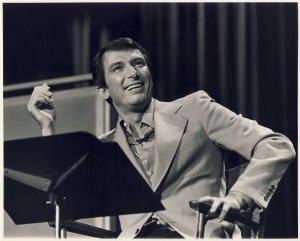
Werner Erhard

Werner Erhard

During my two years of participation in est, I took all of the seminars, some more than once, and many workshops. I also took the later incarnation of the training called the Forum. For 12 months, I was team leader of trainer support for the Berkeley/Oakland Area Center, which meant I enrolled trainer support supervisors for all trainings and workshops and made sure they enrolled teams. Sometimes I ran trainer support for a training or workshop myself.  For six months, I was team leader for seminar logistics (although I had never assisted on a logistics team). As team leader, I enrolled logistics supervisors for all the 10-week seminars, made sure they enrolled teams, and visited each seminar at least once to make sure everything was running smoothly. I also assisted for several months in the office of the San Francisco Area Center.

I thought about going through the guest seminar leader program, but decided against it. While I was still considering it, I was encouraged to spiff up my presentation. Although I had plenty of nicely tailored business suits, I didn’t have a particular style. As an 8, I’ve always been more interested comfort than style. But I was willing to look into it—and it was the 80s—so I followed the suggestion of a couple of my peers and hired a wardrobe consultant. Her name was Rivka, and she wanted me to get my colors done. [There was a book called Color Me Beautiful that was popular at the time. It helped you decide whether you were a spring, summer, winter, or autumn and then gave you a suitable palette of colors for your wardrobe.] I refused to do that, though, which disappointed Rivka. But she said she thought I was an “autumn,” and we went shopping from there: new make-up; new shoes; new clothes—all in colors I would never have thought of for myself. Turned out I am an autumn. In terms of physical presentation, I was transformed.

The Motivator?

It’s hard to escape making a connection between the 3’s preoccupation with having a successful image and the est preoccupation with personal presentation. In Personality Types, Riso and Hudson say:

The United States is fast becoming a dysfunctional “Three” culture: driven, narcissistic, image-oriented, emphasizing style over substance, symbols over reality.

I never felt that est emphasized style over substance or symbols over reality, though. As far as being driven, Werner said:

Your power is a function of velocity, that is to say, your power is a function of the rate at which you translate intention into reality. Most of us disempower ourselves by finding a way to slow, impede, or make more complex than necessary the process of translating intention into reality.

It’s part of my nature as an 8 to be driven, so those words were fuel for me. That’s one of the few quotes I typed up (pre-personal computer) and still have.

3s are called the Motivator, the Achiever, the Succeeder, the Performer, and the Status-Seeker. I could see applying all those names to Werner. He is a very persuasive guy, and many aspects of type 3 fit him. But having said all that, I’m not fully convinced he is a 3.

Or the Maverick?

Here’s how Riso and Hudson describe the healthy version of the 8w7 subtype in The Wisdom of the Enneagram:

Having a quick mind combined with a vision for practical possibilities, people of this subtype are often charismatic and able to attract the support of others to join them in their vision. They are action-oriented, and want to have an impact on their world. They are also good at challenging others to stretch their abilities and to surpass their own expectations so that their lives can be better in some practical way. This is the most independent subtype, often entrepreneurial and interested in creating projects that will ensure their independence.

Based on my experience of him, that description fits Werner perfectly.

Parting Ways

I stopped participating in est after two years because I realized that it was too easy for me. The assisting program, especially, was the perfect place for me to excel at what I was already good at doing. I didn’t have to stretch myself at all. My partner, on the other hand, had a much harder time with assisting, but he ultimately got more out of it than I did. After learning about the Enneagram, I understood that est was Doing-oriented, just like I am, with an emphasis on getting the job done, whatever the job was.

In life you wind up with one of two things – the results or the reason why you don’t have the results. Results don’t have to be explained. They just are.

When we were assisting, we put our personal feelings on the back burner. Feelings were allowed and dealt with in the training, of course, which was a very emotional experience for some people. But although I recall very little specific detail from my own training, I do remember Werner standing on the stage with a box of tissue, pulling them out one-by-one, waving them to the side, and then letting each one flutter to the floor. “Here’s a feeling. Here’s a feeling. Here’s another feeling.” The point was that feelings are fleeting. They come; they go. Don’t get attached to them. I may have interpreted that to mean they could be easily dismissed.

When I decided to get certified as an Enneagram instructor, I chose the training offered by Kathy Hurley and Ted Donson because they seemed to include more of the Feeling Center in their work. That’s the Center I access least effectively, and I realized I needed to stretch myself.

Of course, I went through—and saw—the est training through my own particular filter. The process of the training was not a pleasant experience for me. But the doing involved in assisting was my metier. When I decided to stop participating, my point of view of est—and of assisting—was still colored by the filter through which I viewed the world. I wonder what my experience would have been if I’d been aware of the Enneagram while I was actively involved in est. I’m pretty sure there was a lot more I could have gotten out of it if I hadn’t been so darned good at that particular piece of it.

est and the Enneagram

There are a lot of similarities between est and the Enneagram. Werner talked about the filters through which we look at the world and which distort reality. The Enneagram describes the particularities of those filters. Werner was all about authenticity and authentic self-expression. The Enneagram is a tool to help us move beyond the compulsion of type to experience our true nature, or essence. In the training you get, beyond any doubt, that you are a machine. With the Enneagram you get that you function on autopilot almost 100% of the time.

Making a Difference

These concepts are not unique to either est or the Enneagram, of course. They’re just different approaches to what seem to be universal truths. est focused on making commitments, showing up, and producing a result (doing). The Enneagram is a more intellectual, systematized approach.

What I’m left with from est—what has stayed with me all this time—is this:

You and I want our lives to matter. We want our lives to make a real difference—to be of genuine consequence in the world. We know that there is no satisfaction in merely going through the motions, even if those motions make us successful or even if we have arranged to make those motions pleasant. We want to know we have had some impact on the world. In fact, you and I want to contribute to the quality of life. We want to make the world work.